Basement Flooding Salt Lake County: Causes, Solutions & Prevention
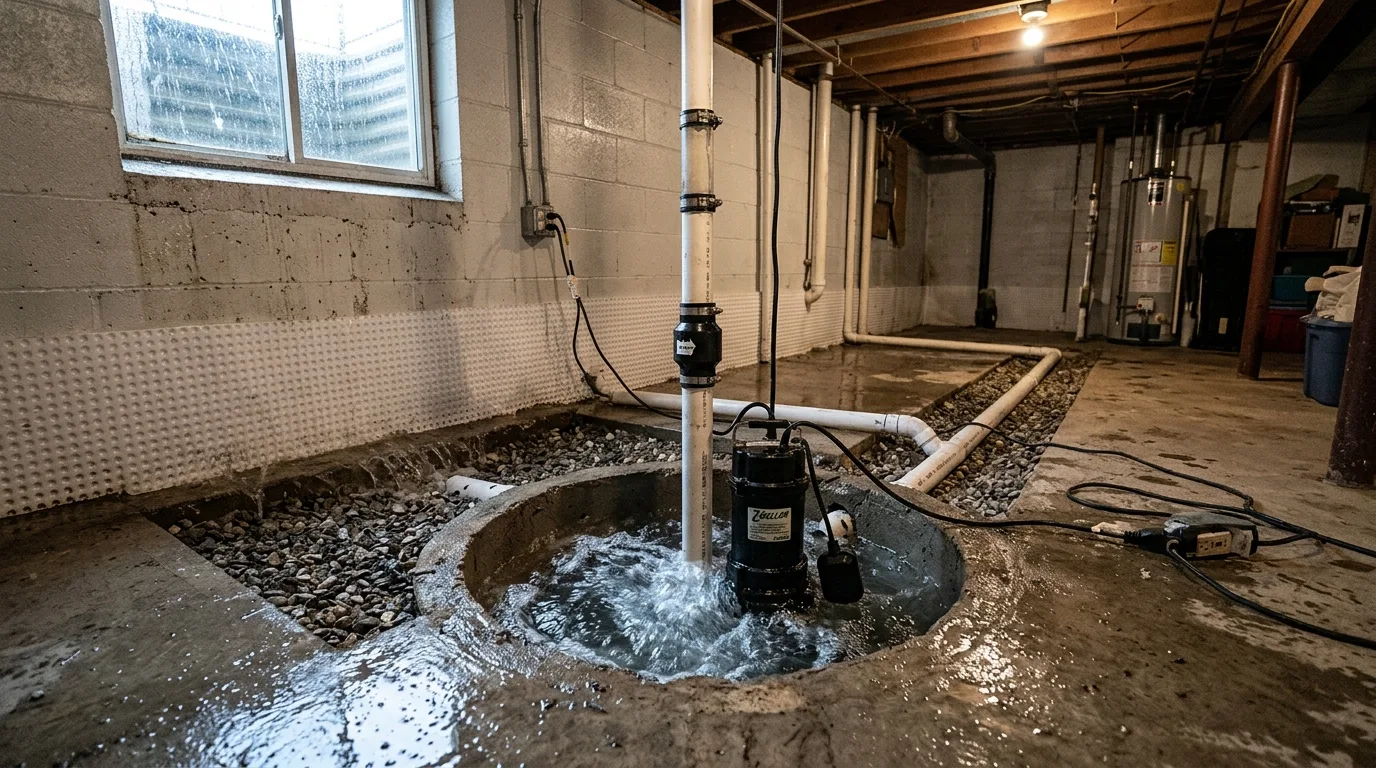
Basement flooding is one of the most predictable yet underappreciated risks facing homeowners throughout Salt Lake County — and South Salt Lake, with its position near the Jordan River and its clay-dominant soils, sits in the zone of highest annual exposure. Unlike a burst pipe or roof leak that can happen anytime, basement flooding in this valley follows a largely predictable seasonal pattern. Understanding the specific mechanisms that drive it in the Salt Lake Valley gives homeowners the information needed to take targeted prevention steps rather than guessing. This post breaks down the causes, solutions, and prevention strategies specific to Salt Lake County basement flooding.
Flooded Basement in South Salt Lake? Call 24/7
IICRC-certified flood cleanup, structural drying, and insurance documentation. 60-minute response. Call (877) 698-1311.
Why Salt Lake County Basements Are Especially Vulnerable
The Utah Geological Survey’s Research Investigation RI-168 — a detailed study of basement flooding in the Salt Lake Valley — identifies shallow groundwater as the dominant mechanism. Salt Lake County’s valley soils are clay-rich and relatively impermeable. When Wasatch snowmelt saturates the soil column from the surface downward each spring, the water table rises across the entire valley floor. In low-lying areas near the Jordan River, including much of South Salt Lake and West Valley City, that water table can rise to within a few feet of the basement floor — or above it in heavy snowmelt years.
When the groundwater table exceeds the basement floor elevation, hydrostatic pressure pushes water through any available entry point: floor drain openings, cracks in concrete block or poured foundation walls, gaps around utility penetrations, and window well drainage failures. The 2023 snowmelt season demonstrated this at scale — with snowpack at 200%+ of average, the Jordan River reached near-record levels and groundwater elevation across Salt Lake County remained elevated for over a month, generating basement flooding calls throughout the valley weeks after the river itself peaked.
This mechanism differs from the flooding most homeowners think about. It’s not the river overflowing its banks into your yard — it’s the water table rising through the soil until it finds a path into your basement. The Liberty District in South Salt Lake and low-lying sections of Murray and West Valley City face the highest exposure to this mechanism, but elevated groundwater during peak snowmelt affects properties across a much wider area of Salt Lake County.
Types of Basement Flooding in Salt Lake County
Hydrostatic pressure seepage: Water table pressure above the basement floor pushes water through foundation walls and floor cracks. Appears as weeping walls, wet spots at floor/wall joints, or standing water accumulating on the floor without an obvious entry point.
Floor drain backup: Municipal storm sewer and sanitary sewer systems overwhelmed during snowmelt or heavy rain can back up through basement floor drains. This may involve sewage contamination and requires Category 2 or 3 protocols.
Window well accumulation: Basement window wells that lack adequate drainage accumulate snowmelt water until the level exceeds the window frame, allowing entry into the basement.
Sump system failure: Sump pumps that were adequate in lower-water years may be overwhelmed during heavy snowmelt events, running continuously until they fail. Battery backup systems prevent failure during power outages that often accompany severe weather.
Surface water intrusion: Improper grading or hardscape that channels surface snowmelt toward the foundation rather than away from it — a common issue in older South Salt Lake neighborhoods where landscape grading has settled over decades.
Practical Solutions and Waterproofing Strategies
Interior drainage system: An interior French drain installed along the interior perimeter of the basement floor collects water entering through walls and floor joints and directs it to a sump pit. This does not stop water entry but manages it before it can cause damage. Cost: $3,000–$8,000 for a typical South Salt Lake basement.
Sump pump upgrade: A properly sized sump pump with a battery backup is the most important flood prevention investment for South Salt Lake homes with basement moisture history. Run-capacitor sump pumps handle continuous operation during prolonged events better than standard models. Cost: $400–$1,200 installed.
Exterior waterproofing membrane: Excavating to the footing and applying a waterproofing membrane to the exterior of the foundation wall provides the most durable long-term solution, but also the most expensive. Appropriate for homes with chronic severe seepage. Cost: $8,000–$20,000 for a typical South Salt Lake home.
Window well covers and drainage: Installing polycarbonate window well covers prevents rain and snowmelt accumulation. Drilling additional drainage holes at the bottom of window wells and filling the base with gravel improves drainage. Cost: $50–$200 per window well.
Foundation crack injection: Polyurethane or epoxy injection into visible foundation cracks creates a flexible seal that prevents water entry at specific crack locations. Appropriate for isolated crack seepage rather than widespread hydrostatic pressure. Cost: $300–$800 per crack.
Exterior grading correction: Ensuring the soil grade drops a minimum of 6 inches over the first 10 feet from the foundation redirects surface snowmelt away from the foundation. Affordable (often under $500 for soil and labor) and highly effective for surface-entry events.
Basement Flood Cleanup — South Salt Lake & Salt Lake County
IICRC-certified flood extraction, structural drying, and full insurance documentation. All carriers accepted. Call (877) 698-1311.
How Basement Flood Cleanup Works After a Salt Lake County Event
Professional basement flood cleanup in South Salt Lake follows an IICRC-certified protocol beginning with water category determination and source assessment. Most snowmelt-driven basement seepage is Category 2 gray water — it carries soil minerals and potential bacterial contamination from the soil column. Floor drain backups are Category 3 (sewage-contaminated black water) and require biohazard protocols throughout.
After category determination, industrial extraction removes standing water, followed by moisture mapping to identify how far water migrated into wall assemblies and under flooring. Wet drywall — typically the bottom 2 feet of any basement wall that held water against it — is removed to allow direct air movement to the framing and insulation behind it. Commercial dehumidifiers and air movers complete structural drying over 3–7 days for typical basement events.
Our flood damage cleanup service includes complete insurance documentation: moisture maps with pre-treatment readings, daily drying progress logs, material removal records, and equipment placement documentation. This package is exactly what your insurance adjuster needs to process your claim promptly and fully.
Cost Factors for Basement Flood Cleanup in Salt Lake County
Basement flood cleanup costs in South Salt Lake and throughout Salt Lake County range from $1,361–$3,500 for a contained basement seepage event (200–400 sq ft, Category 2) to $7,000–$16,000+ for a major event involving sewage backup or complete basement flooding. Category 2 mitigation runs $4–$7 per square foot, Category 3 runs $7–$7.50. Standard homeowner insurance covers sudden seepage events from sudden events — not chronic seepage from a known condition. Jordan River overflow events require separate flood insurance coverage.
Frequently Asked Questions
What is the most common cause of basement flooding in South Salt Lake?
The most common cause in South Salt Lake is hydrostatic pressure from snowmelt-elevated groundwater during the March–May Wasatch snowmelt season. This mechanism is particularly prevalent in the low-lying western sections of the city near the Jordan River and throughout the Liberty District. Spring flood damage cleanup calls make up the largest share of our emergency calls throughout Salt Lake County each year.
Can I use a shop vac to clean up basement flooding in South Salt Lake?
A shop vac can remove small amounts of surface water — a gallon or two — from a contained area. For any event involving more than a few gallons, or where water may have contacted wall assemblies, professional extraction equipment is necessary. A shop vac cannot remove moisture from within wall cavities, subfloor assemblies, or concrete blocks — and cannot reach the IICRC drying standards required for complete restoration. Incomplete drying leads to mold growth within weeks.
How do I know if my South Salt Lake basement has been affected by rising groundwater?
Signs of hydrostatic pressure flooding include: water appearing at the wall-floor joint rather than from a specific crack or opening, multiple entry points simultaneously rather than a single identifiable source, and flooding that worsens over days (as the water table continues to rise) rather than subsiding quickly. White mineral deposits (efflorescence) on foundation walls indicate previous water infiltration through the wall, a reliable predictor of future hydrostatic events.
Salt Lake County Basement Flood Recovery — We're Ready 24/7
South Salt Lake Water Damage Restoration: IICRC-certified basement flood cleanup throughout Salt Lake County. Free assessment. (877) 698-1311.
Related: