Why 60-Minute Response Time Matters for Water Damage in South Salt Lake
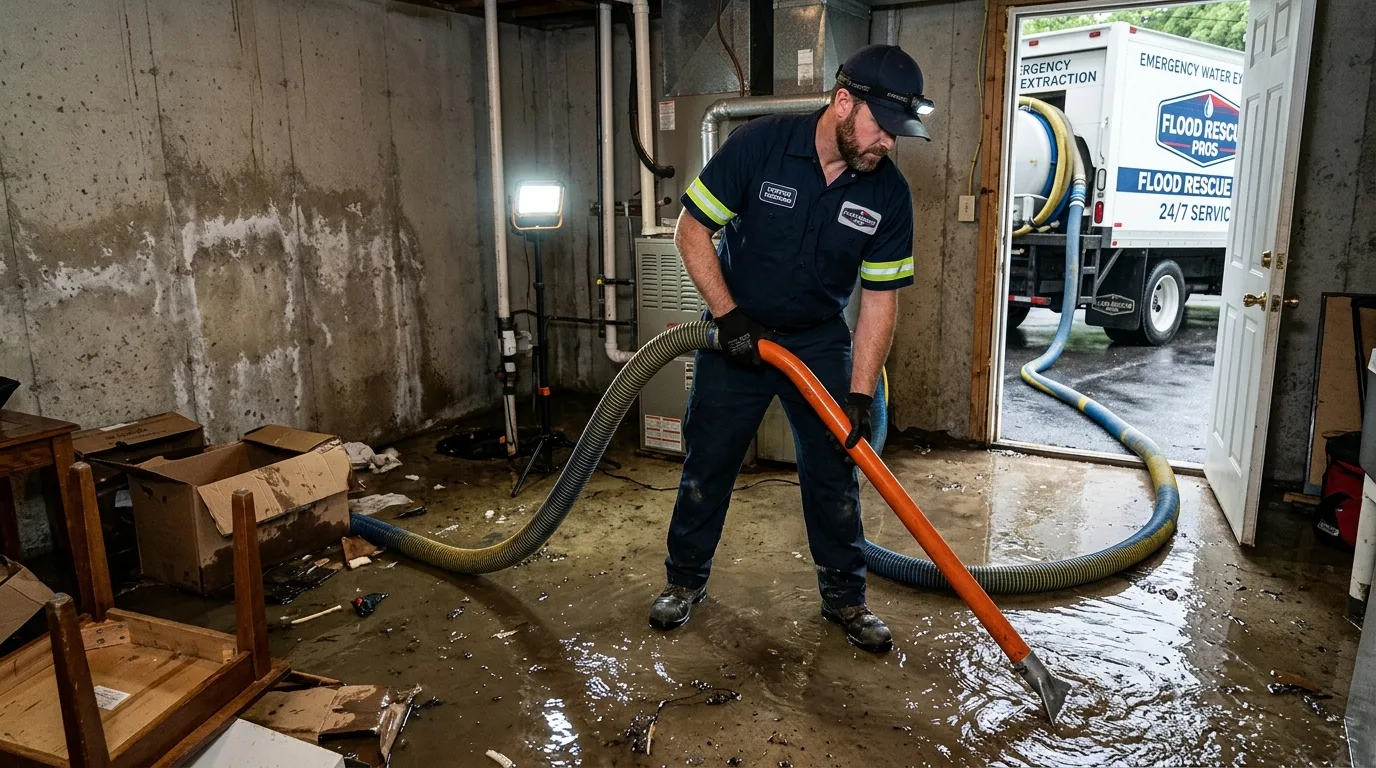
Water is different from most home emergencies — it doesn’t stay in one place. From the moment a pipe bursts or a basement begins flooding in South Salt Lake, water is migrating: under flooring, into wall cavities, through ceiling assemblies, and across subfloor systems at a rate that doubles the scope of required restoration for every few hours of unaddressed exposure. The 60-minute response window isn’t marketing — it’s the practical threshold within which professional extraction consistently prevents the category of damage that turns a manageable event into a structural loss. This post explains exactly what happens to a South Salt Lake home during each hour of unaddressed water exposure, and why the restoration team that arrives within 60 minutes consistently produces better outcomes for homeowners.
60-Minute Emergency Water Damage Response — South Salt Lake
We dispatch immediately, 24/7. IICRC-certified extraction within the critical first hour. Call (877) 698-1311.
The Minute-by-Minute Progression of Water Damage in South Salt Lake Homes
Minutes 0–15: Water discharged from a burst supply pipe begins flowing across flooring and collecting at the lowest accessible points. During this window, water is almost entirely on surfaces — not yet in subfloor assemblies or wall cavities. Clean water in this window is Category 1, restoration is least invasive, and structural drying can typically dry materials in place without any demolition.
Minutes 15–60: Surface water migrates under baseboards and begins wicking up drywall from the bottom. The paper facing of drywall absorbs water rapidly, expanding and beginning to soften. Laminate and engineered wood flooring begins absorbing moisture at the seams. If water reached a lower level through gravity or building systems, ceiling drywall below begins saturating. The scope is growing, but Category 1 water has not yet had time to contact contaminated surfaces and upgrade.
Hours 1–4: Subfloor assemblies are now significantly wet — water has penetrated through the flooring to the plywood or OSB subfloor below, which absorbs moisture and begins to swell and potentially delaminate. Wall cavity insulation at baseboard level is wet. Drywall in the wet area has swelled and may begin showing visible damage. Structural drying can still often save drywall and flooring if professional extraction begins now — but the window is closing.
Hours 4–24: Water has migrated to the full depth of wall cavities in wet areas, saturating wood framing and potentially reaching the sheathing behind. Drywall in affected areas must typically be removed at this point because it cannot be dried in place within IICRC standards. Subfloor sections may require removal if they have been wet long enough to show structural compression. If water contacts any sewage-contaminated surface, Category 1 has upgraded to Category 2 — changing the restoration protocol significantly.
24–48 hours: Mold colonization can begin on damp organic materials — drywall paper, wood framing, insulation facing — within this window under South Salt Lake’s spring and summer humidity conditions. Once mold establishes, the project scope includes mold remediation in addition to structural drying, adding significant cost. Material removal scope is now broader because damp materials that cannot be dried within 24–48 hours of exposure are generally not salvageable.
How Response Time Affects Restoration Cost in South Salt Lake
The financial case for 60-minute response is straightforward. A burst supply pipe event in a South Salt Lake home that is professionally extracted within 60 minutes typically costs $500–$1,500 in mitigation — extraction, drying equipment, and monitoring for 3–4 days. The same event discovered and responded to 12 hours later typically costs $2,000–$5,000 in mitigation — plus additional costs for structural material removal, because drywall and flooring that absorbed water overnight cannot be dried in place. The same event responded to 48 hours later often requires mold remediation on top of structural drying and material removal, pushing total costs to $4,000–$10,000+.
Across Salt Lake County, these cost patterns are consistent: every hour of delay between water event and professional extraction adds to total restoration cost at a rate that accelerates over time. The first hour of professional extraction is the highest-value hour in the restoration process — and the one that most South Salt Lake homeowners miss because they’re trying to handle it themselves first.
What 60-Minute Response Actually Looks Like in South Salt Lake
When you call us at (877) 698-1311, our dispatcher activates the nearest available team and confirms your address, the water source if known, and whether the water source has been controlled. We dispatch within minutes of the call, targeting on-site arrival within 60 minutes to South Salt Lake addresses. The team arrives with truck-mounted extraction equipment, commercial dehumidifiers and air movers, moisture meters and thermal imaging camera, and initial structural assessment tools.
On arrival, we assess water category and source (if not already known), deploy extraction immediately, and begin moisture mapping while extraction is in progress. The first 30 minutes on site are the highest-impact period — removing standing water before it migrates further into structural assemblies. By the time you’ve called your insurance agent and they’ve gotten back to you, we’ve typically already completed primary extraction and placed initial drying equipment.
The response speed advantage is particularly relevant during South Salt Lake’s spring snowmelt season, when basement flooding events are concentrated across multiple days of peak snowmelt. During high-demand periods, contractors without 24/7 staffing experience response delays of 4–12 hours or more — exactly the window within which the most preventable structural damage occurs.
24/7 Emergency Response — South Salt Lake Water Damage Restoration
60-minute response to South Salt Lake addresses. IICRC certified. All carriers. Call (877) 698-1311 now.
Why “Airing It Out” Is Not a Substitute for Professional Extraction
The most common reason South Salt Lake homeowners delay calling for professional help is the belief that opening windows, running household fans, and mopping will address the problem adequately. This approach has two critical failures: it does not achieve the extraction needed to remove moisture from structural assemblies, and it does not produce the IICRC-standard drying conditions needed to prevent mold.
Household fans move air across surfaces — they do not remove moisture from within wall cavities, subfloor assemblies, or concrete block foundation walls. Industrial dehumidifiers create a vapor pressure differential between the structural materials and the surrounding air that drives moisture out of the structural assembly and into the air, where it is then captured by the dehumidifier. Without this vapor pressure management, wet structural materials remain above the moisture threshold for mold growth indefinitely, regardless of how much air is moved across the surface.
The practical result: South Salt Lake homeowners who “aired out” a flooding event rather than calling for professional extraction frequently discover mold 4–6 weeks later in wall cavities and under flooring that appeared dry — because the visible surface dried while hidden surfaces remained above mold-growth moisture thresholds for weeks.
Cost Factors Related to Response Time in South Salt Lake
Beyond the direct restoration cost impact, response time affects several indirect costs that homeowners often don’t account for. Extended displacement — staying in a hotel or with family while the home is being restored — costs $100–$200 per day. Most South Salt Lake homeowner policies include loss of use coverage that compensates for these costs, but only for the period of mandatory displacement. Fast restoration shrinks the displacement period.
The cost of mold remediation added to a water damage project — because mold established before professional drying began — runs $500–$3,000 for small events and $3,000–$10,000+ for larger infestations. This is avoidable cost for events where professional extraction began within the first 4–6 hours. The water damage restoration cost guide covers all cost factors in detail.
Frequently Asked Questions
What if I can’t afford emergency professional extraction for water damage in South Salt Lake?
Your homeowner insurance policy covers the cost of professional water damage extraction and drying for covered sudden events — the extraction team is not an out-of-pocket expense for covered losses. Call your carrier immediately after calling us, and we work directly with your adjuster to confirm coverage before detailed authorization discussions. The cost of professional extraction is always less than the cost of the structural damage and mold that result from delayed response.
Does response time matter less for small water damage events in South Salt Lake?
No — response time matters for all events, but the relative stakes are lower for small events because the damage is already contained. A small laundry room supply hose failure that stays on a tile floor causes minimal damage regardless of response time. The 60-minute window is most critical for events where water has access to structural assemblies — any flooding on wood flooring, carpet, or drywall-walled spaces where water can migrate into cavities.
How does 24/7 availability change outcomes for South Salt Lake homeowners?
A burst pipe at 2 AM is as damaging as one at 2 PM — but the homeowner who reaches a 24/7 team at 2 AM and has extraction complete by 3:30 AM has a fundamentally different outcome than the homeowner who waits for a business-hours response at 8 AM. Six hours of additional water migration is not a minor variation in outcome — it’s often the difference between drying in place and demolishing drywall. Our 24/7 availability for water damage restoration is a core service commitment, not a marketing statement.
South Salt Lake's 60-Minute Emergency Water Damage Team — Call Now
IICRC certified, 24/7 dispatch, all insurance carriers accepted. Don't wait — call (877) 698-1311.
Related: