Emergency Water Damage Restoration South Salt Lake: What to Do
Every minute counts when water is actively damaging your South Salt Lake home — the difference between a contained event and a structural loss is often measured in hours, not days. In this post, we cover what to do in the first 30 minutes after discovering water damage, how to safely limit spread before help arrives, and what water damage restoration South Salt Lake looks like from emergency call to final clearance.
Water Emergency in South Salt Lake? Call Now — 24/7
Our IICRC-certified team responds in 60 minutes or less. Call (877) 698-1311 any time, day or night.
Why Emergency Response Time Matters for South Salt Lake Homeowners
Water damage accelerates with every hour it goes unaddressed. Within the first hour, water penetrates drywall, saturates insulation, and begins migrating under flooring. By 24 hours, mold can begin colonizing damp organic materials — drywall paper, wood framing, carpet backing. By 48 hours in South Salt Lake’s climate, what began as a cleanable event becomes a remediation project requiring material removal. The financial difference between calling within the first hour and waiting until the next morning can be thousands of dollars in avoidable structural damage.
South Salt Lake’s clay-rich Salt Lake County soils compound this urgency outdoors. During spring snowmelt and heavy rain events, saturated ground prevents water from draining away from foundations. When that external moisture pressure coincides with an interior pipe burst or appliance failure, the combined water load on structural assemblies increases faster than in communities with better-draining soils. The Popperton Park neighborhood and other lower-lying sections of South Salt Lake are particularly vulnerable to this combined pressure during peak snowmelt season in March and April.
The 2023 Wasatch snowmelt season — when Jordan River flows reached near-record levels — showed how quickly water can overwhelm infrastructure across Salt Lake County. Homeowners who called professional extraction teams within hours of discovering basement seepage limited their losses dramatically compared to those who waited a day or two to see if the water would recede on its own.
Types of Water Damage Events in South Salt Lake
Burst or frozen pipes: Freeze-thaw cycles from November through February regularly cause pipe failures in South Salt Lake homes. Water from a burst pipe inside a wall cavity is especially dangerous because it saturates insulation and framing before any visible surface damage appears.
Appliance overflow: Washing machine hoses, dishwasher supply lines, and refrigerator water lines fail without warning. A failed washing machine hose can discharge 600 gallons or more before the cycle completes.
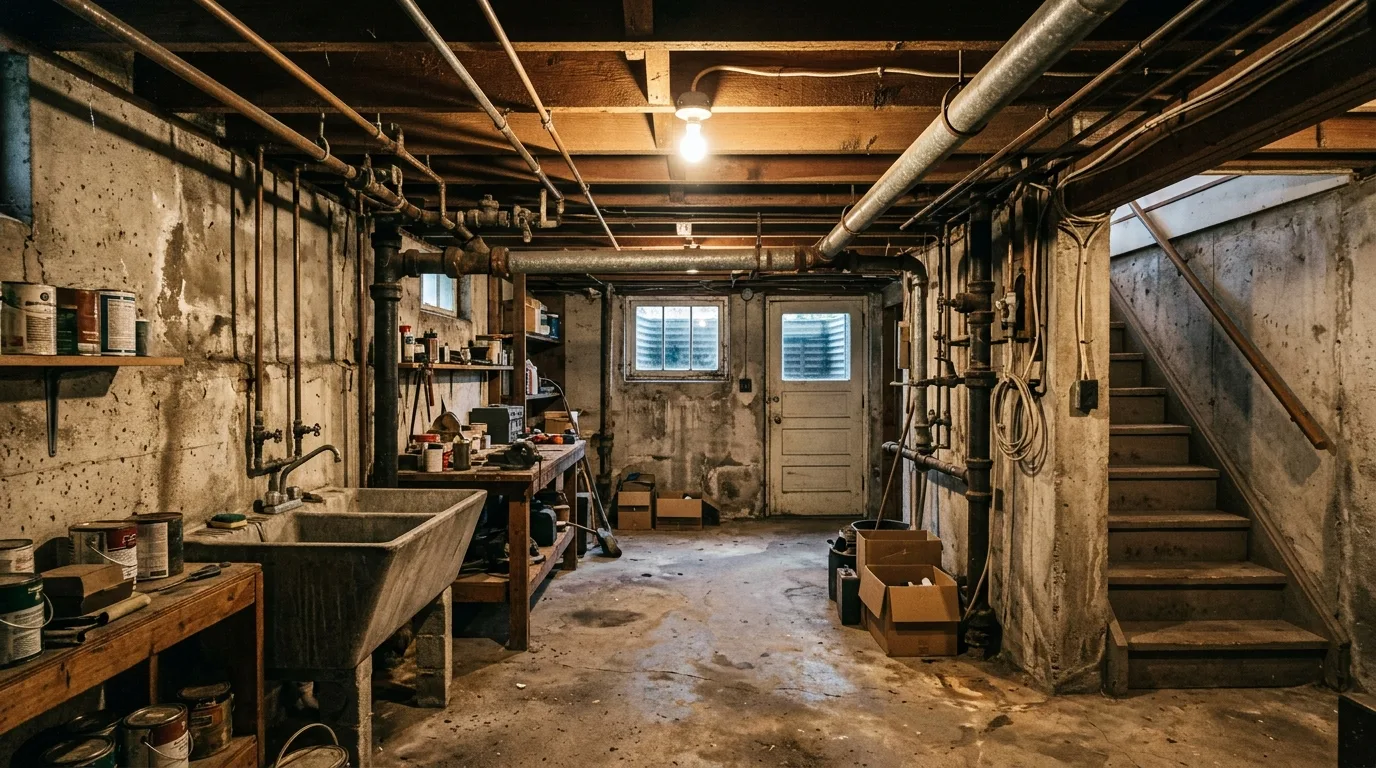
Basement seepage: Snowmelt-saturated Salt Lake County soils push water through foundation cracks, window wells, and floor drains during the March–May peak season. This is the most predictable annual water risk in South Salt Lake.
Roof and window intrusion: Storm damage during summer thunderstorms or winter ice damming allows water to enter ceiling assemblies and run down wall cavities.
Sewage backup: Blocked municipal sewer lines during peak rainfall events force raw sewage back through floor drains — a Category 3 biohazard event requiring different response protocols than clean water.
Sump pump failure: A failed sump pump during a high-water event allows rapid basement accumulation that can reach several inches within hours.
Practical Steps: What to Do Before Help Arrives
Stop the water source: Turn off the main water supply if the source is a burst pipe. Call your utility if the source is municipal. Do not enter flooded areas where electrical panels or outlets may be submerged.
Document everything: Take photos and video of all visible water and damage before moving anything. Your insurance adjuster will need this documentation — it establishes the scope of the loss at the time of discovery.
Remove standing water where safe: If you can safely access a wet-dry vacuum or mop, removing surface water slows migration into subfloor assemblies. Do not use household fans to speed drying — inadequate air movement without dehumidification can spread moisture to adjacent areas.
Protect contents: Move furniture, electronics, and documents off wet flooring when safe. Elevate items on aluminum foil or wood blocks if moving them isn’t possible.
Call your insurance company: Report the loss promptly — many policies have notification requirements. Then call us at (877) 698-1311 for immediate professional extraction.
Do not use a regular vacuum: Household vacuums are not rated for water and create electrocution risk. Extraction requires truck-mounted or commercial wet extraction equipment.
South Salt Lake Emergency Response — 60 Minutes or Less
IICRC-certified extraction, structural drying, and insurance documentation. All carriers accepted. Call (877) 698-1311.
How Professional Water Damage Restoration Works in South Salt Lake
After arrival, our IICRC-certified technicians complete a full moisture assessment using thermal imaging cameras and calibrated moisture meters to map both visible and hidden water intrusion. This assessment determines the water category (clean, gray, or black), the affected square footage, and whether structural materials can be dried in place or must be removed.
Industrial extraction equipment — truck-mounted units capable of removing hundreds of gallons per hour — completes initial water removal far more efficiently than any consumer equipment. Following extraction, commercial-grade dehumidifiers and air movers are placed according to IICRC drying calculations based on the cubic footage of air in the affected space. Moisture readings are logged daily to confirm drying progress.
Water mitigation documentation — moisture maps, extraction logs, equipment placement records — is produced throughout the project for your insurance claim. We communicate directly with your adjuster and produce the scope of loss documentation they need to process your claim fully and promptly.
Cost Factors for Emergency Water Damage Restoration in South Salt Lake
Emergency water damage restoration in South Salt Lake costs $450–$1,000 for small contained events, $1,361–$6,270 for room-level flooding, and $7,000–$16,000+ for large structural losses. Per square foot: clean water $3–$4, gray water $4–$7, black water $7–$7.50. Response time is the biggest variable: fast response saves materials and dramatically reduces total cost. Your homeowner insurance policy likely covers sudden water damage events — we help confirm coverage before work begins.
Frequently Asked Questions
How quickly must I act after discovering water damage in South Salt Lake?
Act immediately. Call a restoration professional as your first call — before calling your insurance company, before assessing the full extent, before trying to dry anything yourself. Every 15 minutes of additional water contact time increases the scope of required remediation. Our team responds within 60 minutes to South Salt Lake addresses and begins extraction immediately on arrival. The restoration process for water damage restoration in South Salt Lake begins the moment we arrive — no waiting for an adjuster first.
What water damage does homeowner insurance cover in South Salt Lake?
Standard homeowner policies in Utah typically cover sudden and accidental water damage from burst pipes, appliance failures, and roof intrusion. They generally do not cover flooding from external sources (Jordan River overflow, surface storm flooding) — that requires a separate NFIP flood insurance policy. Sewage backup is sometimes covered as an endorsement rather than the base policy. We review your specific coverage with you before any work begins so there are no surprises.
Does water damage cause mold in South Salt Lake homes?
Yes — mold can establish on damp organic materials in as little as 24–48 hours in conditions common to South Salt Lake. Mold is particularly aggressive in wall cavities, behind baseboards, and under flooring where air circulation is limited and organic materials stay damp longer than visible surfaces. After any water event, mold remediation inspection should be part of the restoration scope — our assessment includes moisture mapping that identifies areas with elevated mold risk before visible growth appears.
Start Your Water Damage Recovery — Call 24/7
South Salt Lake Water Damage Restoration responds in 60 minutes or less to addresses throughout Salt Lake County. IICRC certified. All carriers accepted.
Related: