Spring Snowmelt South Salt Lake: Protect Your Home from Jordan River Flooding
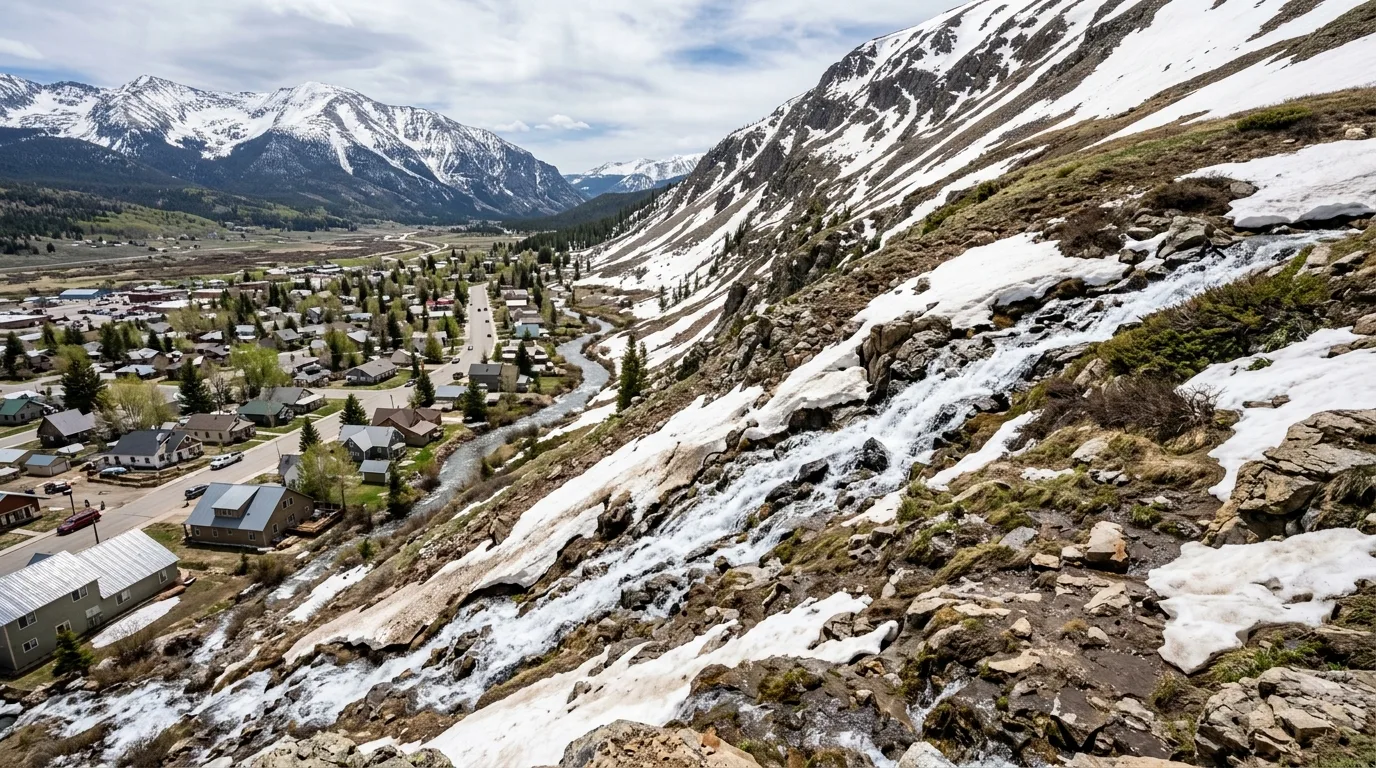
How do you protect a home in South Salt Lake when the mountains hold more water than the city’s drainage system can handle? Every spring, Wasatch Range snowpack melts and flows into the Jordan River — and when snowpack is at or above average, South Salt Lake homeowners face real flood risk from groundwater pressure, surface runoff, and river overflow. In this post, we cover the specific mechanisms that cause spring water damage in South Salt Lake, UT, the preparation steps that reduce risk before the melt season peaks, and what to do if water enters your home despite your best efforts.
Flood Damage Cleanup in South Salt Lake — 24/7 Response
IICRC-certified flood cleanup for Jordan River flooding and snowmelt events. Call (877) 698-1311.
Why Spring Snowmelt Creates Serious Flood Risk in South Salt Lake
South Salt Lake occupies the western edge of Salt Lake Valley, where the Jordan River forms part of the city’s western boundary. The Jordan River is the drainage outlet for Utah Lake and the entire Wasatch Front drainage basin — during heavy snowpack years, the river’s capacity is tested every spring as snowmelt accelerates from late February through May. The 2023 snowmelt season reached over 200% of average snowpack, pushing the Jordan River to near-record levels and requiring emergency sandbagging operations throughout the county.
What makes this flooding mechanism uniquely challenging is that it operates through multiple pathways simultaneously. Direct river overflow is the most visible risk, affecting properties in the Liberty District and other areas near the Jordan River corridor. But groundwater pressure is the more pervasive risk for South Salt Lake homeowners: as the entire Salt Lake Valley soil column becomes saturated with snowmelt, the shallow groundwater table rises across the city. When that water table rises above the level of basement floors — which can happen weeks after peak snowmelt, not just during the peak — water seeps through foundation walls and floor drains regardless of distance from the river.
South Salt Lake’s clay-heavy soils, documented by the Utah Geological Survey in Research Investigation RI-168, hold water exceptionally well and release it slowly. This creates a prolonged groundwater elevation window during spring that can last weeks, extending the period of basement flood risk well past the visible river flooding events that make the news. Homeowners near Central Pointe and throughout the city should treat the entire March–May window as active flood season, not just the weeks when the Jordan River makes headlines.
Types of Spring Water Intrusion in South Salt Lake
Foundation wall seepage: Water pressure from saturated Salt Lake County soils pushes moisture through hairline cracks in concrete or block foundation walls. Often appears as slow weeping or wet spots that worsen as the snowmelt season progresses.
Floor drain backup: Saturated ground and overwhelmed municipal drainage systems can cause water to back up through basement floor drains — especially during the heaviest runoff periods.
Window well flooding: Window wells without proper covers or inadequate drainage channels accumulate snowmelt water that eventually enters through basement windows.
Sump pump overload: Sump pumps that worked adequately in lower-snowpack years may be overwhelmed during heavy melt seasons, running continuously until they fail from heat or mechanical wear.
Surface runoff intrusion: Snowmelt running downhill across the South Salt Lake landscape can pool against foundation walls or enter through garage doors and crawlspace vents.
Practical Preparation Steps Before Snowmelt Season
Test your sump pump in February: Run a bucket of water into the sump pit to confirm the pump activates and discharges properly. Replace any pump older than 5 years before the spring melt season begins. Consider a battery backup system for power outage protection during storm events.
Inspect and extend downspouts: Downspouts that terminate within 3 feet of the foundation allow snowmelt from the roof to drain directly against the foundation walls. Extend downspouts to discharge at least 6 feet from the foundation on the downslope side.
Clear window well drains: Window wells with drain holes at the bottom can become clogged with leaf debris and sediment over winter. Clear them in late February to ensure they drain rather than accumulate water.
Grade soil away from foundation: South Salt Lake’s clay soils compact and settle over time, sometimes creating a reverse grade that channels surface water toward the foundation. Add soil to restore a minimum 6-inch drop over the first 10 feet from the foundation.
Install a floor drain backflow preventer: In areas prone to floor drain backup, a backflow preventer valve prevents municipal sewer pressure from pushing sewage back through your floor drain during peak capacity events.
Check your flood insurance: Standard homeowner policies do not cover Jordan River overflow or ground-level storm flooding. The National Flood Insurance Program (NFIP) provides coverage for these events — check whether your property is in a mapped flood zone and whether NFIP coverage makes sense for your risk level.
Flooded Basement in South Salt Lake? We Respond 24/7
Professional flood cleanup with IICRC-certified water extraction, structural drying, and full insurance documentation. Call (877) 698-1311.
How Flood Damage Cleanup Works After a Spring Event
When snowmelt floods your South Salt Lake basement or ground floor, the restoration process follows a specific protocol. Water category determination comes first: snowmelt that entered through foundation walls is typically Category 2 (gray water) if it carried soil and mineral contamination, or Category 1 (clean water) if it entered through a sump failure from a clean source. Direct river overflow or floor drain backup is classified as Category 3 (black water) and requires biohazard protocols.
After water category assessment, industrial extraction equipment removes standing water — truck-mounted extractors rated for thousands of gallons per hour clear standing water from basements far faster than any consumer equipment. Commercial dehumidifiers and air movers placed according to IICRC drying calculations then begin removing residual moisture from structural materials. Daily moisture readings confirm drying progress and determine when the structure has reached clearance targets.
Insurance documentation is produced throughout the process: moisture maps, extraction logs, equipment placement records, and photo documentation of all affected areas. This package gives your adjuster everything needed to process your claim accurately. Our flood damage cleanup service handles every phase from initial extraction through final clearance testing.
Cost Factors for Spring Flood Cleanup in South Salt Lake
Flood cleanup in South Salt Lake typically costs $1,361–$6,270 for room-level events and $7,000–$16,000+ for major structural losses. Water category is the primary cost driver — Category 2 runs $4–$7 per square foot and Category 3 runs $7–$7.50. Standard homeowner insurance covers sudden internal events but not Jordan River overflow; the NFIP covers the external flooding risk. Acting within the first hour of discovery dramatically limits total cost.
Frequently Asked Questions
How do I know if my South Salt Lake home is at risk for spring flooding?
Properties within half a mile of the Jordan River, in low-lying sections of West South Salt Lake, or in areas with basements below street grade are at the highest risk. Even properties farther from the river can experience basement seepage when the Salt Lake Valley groundwater table rises during heavy snowmelt years. A simple test: inspect your basement walls for efflorescence (white mineral deposits) — this indicates prior water infiltration and elevated future risk.
Does homeowner insurance cover Jordan River flooding in South Salt Lake?
No — standard homeowner insurance in Utah does not cover flooding from external sources including Jordan River overflow, ground-level storm runoff, or surface flooding from snowmelt. This risk requires a separate National Flood Insurance Program (NFIP) policy. Contact your insurance agent about flood insurance before the spring melt season begins, not during or after an event.
How fast should I call for flood cleanup after basement flooding in South Salt Lake?
Call immediately — the same hour you discover water intrusion. The first 1–2 hours after discovery are the critical window for limiting water migration into structural materials. Our emergency water damage restoration team responds within 60 minutes to South Salt Lake addresses and begins extraction on arrival. Don’t wait to see if it drains on its own — it won’t, and the delay is costly.
Spring Flooding Preparation and Emergency Response
South Salt Lake Water Damage Restoration: IICRC-certified flood cleanup throughout Salt Lake County. Call (877) 698-1311.
Related: