5 Signs of Hidden Water Damage in Your South Salt Lake Home
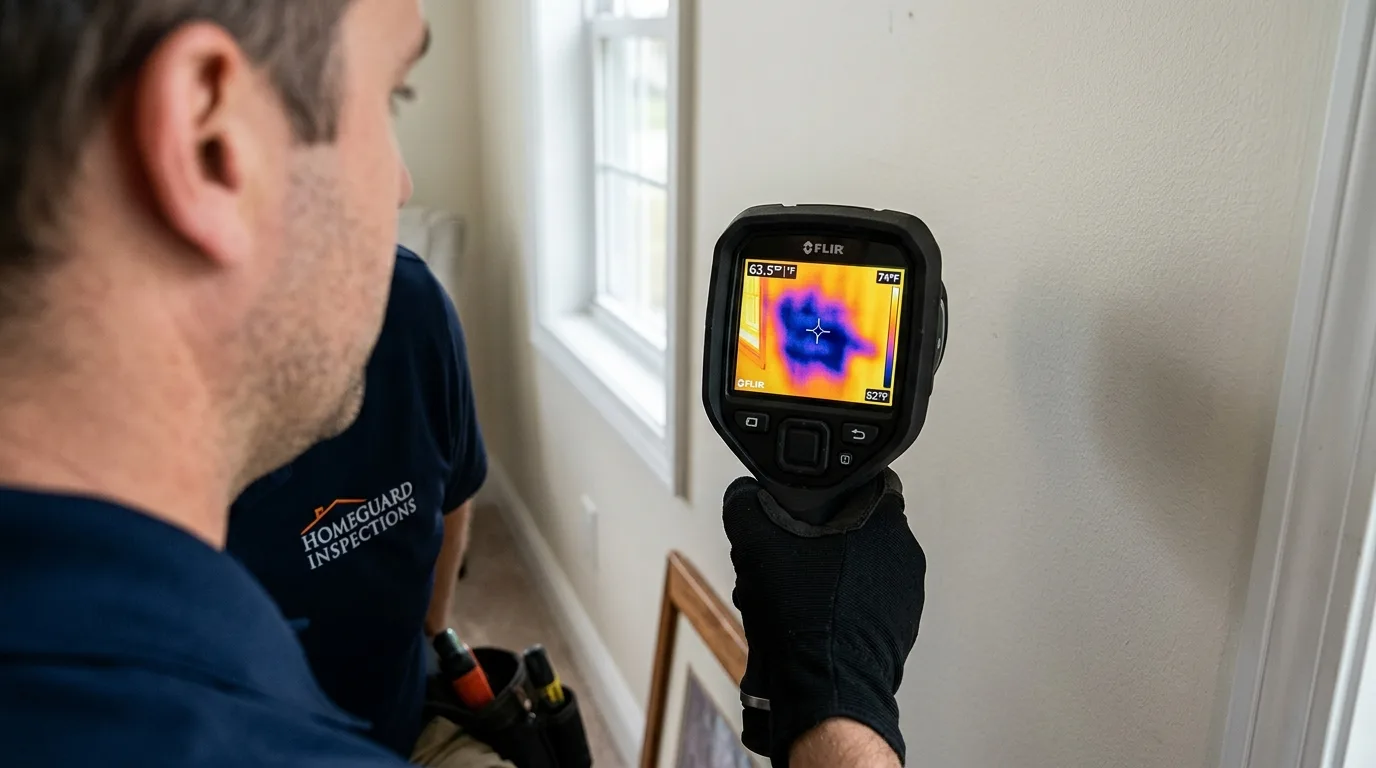
The water damage you can see is rarely the problem — the water damage you can’t see is. South Salt Lake homes regularly develop significant hidden moisture problems from causes that produce no obvious flooding: slow plumbing leaks inside walls, condensation in unventilated crawlspaces, and persistent foundation seepage during spring snowmelt season. These hidden events don’t call attention to themselves with standing water or wet floors. They announce themselves months later with musty odors, stained ceilings, or mold that appears to have come from nowhere. This post covers the five most reliable signs that your South Salt Lake home has hidden water damage, and what to do when you find them.
Hidden Water Damage Inspection in South Salt Lake
IICRC-certified moisture assessment using thermal imaging and calibrated meters. Free assessment. Call (877) 698-1311.
Why Hidden Water Damage Is a Particular Problem in South Salt Lake
South Salt Lake’s semi-arid climate creates a false sense of security about water damage risk. The average annual precipitation is modest — 16.2 inches per year — and visible surface water events are seasonal rather than constant. But the city’s position near the Jordan River, its clay-rich Salt Lake County soils, and its older housing stock create conditions for water damage to develop slowly and invisibly between visible flood events.
During spring snowmelt season, groundwater elevation across Salt Lake County rises steadily — not in one dramatic flood event, but gradually over weeks. A basement that appears dry after the first warm week of March may have moisture entering slowly through hairline foundation cracks throughout April. By the time the homeowner notices anything, mold has been growing inside the wall cavity for a month. Similarly, a plumbing supply line with a pinhole leak inside a wall can saturate the wall cavity for months before paint bubbles or drywall softens visibly.
Homes in the Popperton Park neighborhood and the older residential sections near the Central Pointe corridor are particularly vulnerable because their construction era — often 1960s through 1980s — predates modern moisture barriers, vapor barriers, and the building science understanding that informs current construction standards. These homes need more active monitoring than newer construction.
Sign 1: Musty or Earthy Odors Without Visible Moisture
A persistent musty odor — particularly in basements, bathrooms, or along exterior walls — is the most reliable early warning sign of hidden water damage and mold. Mold produces volatile organic compounds (MVOCs) that generate the characteristic earthy smell before any visible surface growth appears. The odor is often most noticeable when returning home after time away, when the senses are not acclimated to the gradual accumulation of the smell.
South Salt Lake homeowners frequently discover this odor in late spring — after the snowmelt season has created elevated basement humidity for weeks — and attribute it to “just how basements smell.” That association is wrong: a healthy, dry basement does not smell musty. Musty odor means moisture above threshold levels is supporting mold activity somewhere in the space, even if you can’t find the source visually.
What to do: Schedule a professional moisture inspection using thermal imaging and calibrated moisture meters. These tools identify areas of elevated moisture in wall cavities and behind surfaces that the human nose can detect but eyes cannot locate. A mold remediation inspection will determine whether active mold is present and where.
Sign 2: Staining or Discoloration on Ceilings and Walls
Brown or yellow staining on ceilings — often appearing as rings or irregular patches — indicates water has reached the drywall from above. The staining appears when water dissolves minerals in the drywall and deposits them on the surface as it evaporates. The stain often forms a ring at the outer boundary of the wet area — the point where the evaporation front was strongest.
Ceiling staining in South Salt Lake homes has two common sources: a roof leak from the snowmelt and freeze-thaw cycles that stress roofing materials each winter, or a plumbing supply line running through the ceiling from an upper floor. Either source can produce ceiling staining that appears long after the active leak has temporarily stopped — the stain persists while the source may be intermittent.
Wall staining, particularly at the base of exterior walls or in corners, frequently indicates foundation seepage — water entering through the foundation wall, running down the inside face, and depositing minerals on the drywall surface as it dries. Efflorescence — white crystalline deposits on basement walls — is a specific form of this mineral deposition and is a reliable indicator of recurring water infiltration through the wall.
What to do: Do not simply paint over ceiling or wall stains — address the source first. Our moisture assessment identifies whether the staining is active (still wet behind the surface) or historic (dried but not yet remediated). Active staining requires immediate professional response; historic staining requires source identification before any surface repair.
Sign 3: Peeling Paint, Bubbling Wallpaper, or Swollen Door Frames
Paint and wallpaper adhere to drywall or plaster through a bond with the surface. When moisture migrates into the wall from behind, it breaks that bond, causing paint to peel or bubble and wallpaper to lift at seams. Similarly, wood door frames and window frames absorb moisture and swell when wall cavities behind them maintain elevated humidity — causing doors to stick or operate poorly, often after a period where they previously worked fine.
In South Salt Lake, this sign most commonly appears on exterior-facing walls in winter and spring — when foundation seepage or condensation within the wall cavity raises moisture levels in the wall assembly. The south and west-facing walls of older homes are particularly vulnerable because they experience significant temperature differentials between the interior and exterior during cold weather, driving condensation within the wall cavity.
What to do: Check the paint condition on all exterior-facing walls, particularly in bathrooms and kitchens where interior humidity is highest. Peeling paint on interior walls should trigger a professional moisture inspection — it is not a cosmetic problem waiting for a paint job; it is a symptom of a moisture problem that will continue worsening until the source is found and corrected.
Hidden Water Damage Detection in South Salt Lake — Professional Inspection
Thermal imaging and moisture mapping to find what you can't see. Free assessment. Call (877) 698-1311.
Sign 4: Soft or Bouncy Flooring and Dark Spots on Subfloor
Flooring that flexes underfoot, feels soft in specific spots, or produces a hollow sound when walked on may indicate subfloor damage from water exposure. The wood products used in subfloor construction — plywood and OSB — absorb moisture and lose structural integrity when saturated. This most commonly happens from below (basement or crawlspace moisture migrating upward through the subfloor) or from appliance leaks above (dishwasher, refrigerator, toilet).
In South Salt Lake’s older housing stock with crawlspace foundations, elevated crawlspace humidity from spring snowmelt creates conditions for subfloor moisture absorption that continues throughout the summer. Crawlspaces without adequate vapor barriers over exposed soil, or with blocked ventilation, maintain very high relative humidity that migrates upward into the subfloor assembly continuously.
Dark spots on the underside of a plywood subfloor, visible from a crawlspace, are a particularly reliable indicator. These dark spots are almost always mold colonizing the wood fiber on the underside of the subfloor — the surface that faces the high-humidity crawlspace and dries last. Crawlspace mold in South Salt Lake homes is a common post-snowmelt-season finding that homeowners often miss because they don’t regularly inspect the crawlspace.
What to do: Inspect your crawlspace annually after the spring snowmelt season. Look for visible mold on the underside of the subfloor, evidence of standing water, and condition of the vapor barrier. Our moisture assessment includes crawlspace inspection as a standard component.
Sign 5: Unexpectedly High Water Bills
A water bill significantly higher than the same month in the prior year — without a corresponding change in usage — indicates a plumbing leak somewhere in the system. Supply line leaks inside walls, a running toilet with a worn flapper, or an irrigation system leak can all drive up water consumption without producing visible water damage immediately.
In South Salt Lake, slow plumbing leaks inside wall cavities are a particularly significant concern because the homes most vulnerable to this problem — older construction with aging galvanized or early copper plumbing — are also the homes where wall cavities have less vapor protection and wood framing with the highest moisture absorption capacity. A supply line pinhole leak that discharges just a few gallons per hour into a wall cavity can saturate the insulation and framing completely within weeks.
What to do: Compare current water bills against the same period in prior years. If consumption is unexplained-higher, shut off all water-using fixtures and check your meter — if the meter continues advancing, there is an active leak somewhere in the system. Pressure testing of the supply system or a plumber’s inspection with a borescope camera in the wall cavity can locate the source.
When to Call for Professional Moisture Assessment
Any combination of the five signs above — or even one of them in a home that has experienced prior water events — warrants a professional moisture assessment using thermal imaging and calibrated moisture meters. The cost of a professional inspection is trivial compared to the cost of discovering active mold or structural damage months after the warning signs first appeared.
Our IICRC-certified technicians use thermal imaging cameras and calibrated moisture meters to map moisture in structural assemblies without opening walls unnecessarily. When elevated moisture is found, we identify the source, quantify the scope, and provide a restoration recommendation before any work begins. If you find no evidence of hidden damage — that’s the best outcome and worth confirming definitively.
Frequently Asked Questions
How much does a moisture inspection cost for a South Salt Lake home?
We provide free initial moisture assessments for South Salt Lake homeowners. A full thermal imaging inspection with comprehensive moisture mapping of all structural assemblies is included in our restoration estimate process. If the assessment reveals no active hidden damage, there is no cost. If restoration work is indicated, the assessment findings are fully documented for your insurance claim.
Can hidden water damage affect my South Salt Lake home’s resale value?
Undisclosed hidden water damage discovered during buyer inspection in South Salt Lake is one of the most common causes of transaction failure and price renegotiation. Professional remediation of hidden water damage — with documentation confirming the source was found, the damage was restored, and clearance testing passed — protects and preserves your home’s value. See also our insurance claims guide for how covered hidden water damage is handled.
How often should I inspect for hidden water damage in South Salt Lake?
Annually — ideally in late spring after the Wasatch snowmelt season, and again in mid-fall before the winter freeze season. Focus inspections on: basement and foundation walls, crawlspace inspection (underside of subfloor, vapor barrier condition), attic inspection (insulation condition, signs of roof leak), and any area with prior water damage history. These two annual inspections catch the vast majority of developing problems before they become expensive emergencies.
Find Hidden Water Damage Before It Finds You — South Salt Lake
Free professional moisture assessment with thermal imaging. All insurance carriers. Call (877) 698-1311.
Related: